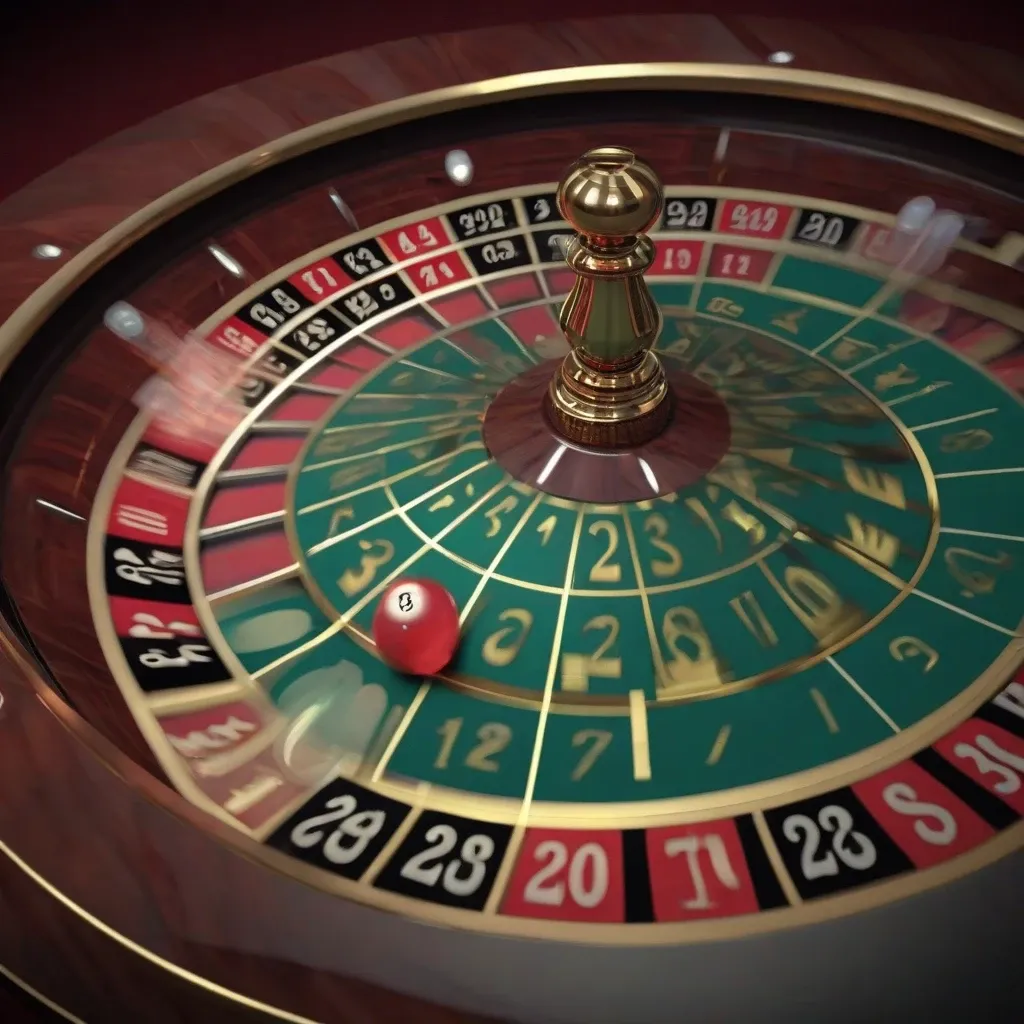
Here’s a question that sparks endless debate in the hushed halls of online casinos and smoky backrooms alike: when the digital wheel spins in online roulette, is it all down to sheer, unadulterated luck? Or can a sharp mind and a well-honed strategy actually tip the scales in your favor? As someone who’s navigated the thrilling, sometimes bewildering, world of roulette for years, let me tell you, the answer is far more fascinating than a simple ‘yes’ or ‘no.’ We’re diving deep into the heart of this enduring roulette debate, not to find a magic bullet, but to demystify the game and explore the real potential for strategy to influence outcomes in the digital realm. Prepare for a journey that peels back the layers of chance, revealing a more nuanced truth about your online roulette experience.
The Foundation: Understanding Randomness and the House Edge
Dive into the whirl and twirl of the roulette table, and you’ll quickly notice it’s a game where numbers dance and fate takes the driver’s seat. At its heart, roulette is a beautiful, if sometimes brutal, illustration of probability. Every spin of the wheel, every bounce of the ball, is an independent event. This means what happened on the last spin has absolutely zero bearing on the next. Predicting the outcome with any degree of certainty is, frankly, a fool’s errand. The odds we talk about are just that – probabilities, not promises. This inherent randomness is what makes the game so thrilling, but it’s also the bedrock upon which the casino advantage is built.
Probability in Play: The Math Behind Each Spin
Let’s get down to brass tacks. The roulette bet probabilities aren’t shy about stating their case. Placing a bet on a single number, a “straight-up,” gives you a roughly 2.7% chance of winning on a European wheel and just a shade over 2.6% on an American one. Now, compare that to the payout – a juicy 35 to 1. Sounds great, right? But the math tells a different story when you look at expected value. Think of it like this: imagine a lottery where you pay $1 to play, and your chances of winning are 1 in 100. If the prize is $99, you’re actually losing money in the long run, even though youcould* win big. That’s the house edge at work, subtly draining your bankroll over time with less-than-favorable long-term odds.
The Unavoidable House Advantage
The secret sauce, the little wrinkle that ensures the house always, eventually, wins, is deceptively simple: the zero pocket. In European roulette, it’s just the single ‘0’. In American roulette, you’ve got both the ‘0’ and the dreaded ’00’. These aren’t just spots on the wheel; they’re the direct source of the house advantage. Consider a simple red or black bet. You’d assume it’s a 50/50 proposition, wouldn’t you? But with the green zero (or zeros), the odds shift ever so slightly away from you. This tiny mathematical imbalance, amplified over millions of spins, is what guarantees the casino’s profitability. It’s not about luck; it’s about pure, unadulterated mathematics built into the very fabric of the game’s design, giving the casino advantage its unshakable foundation.
The Allure (and Illusion) of Betting Systems
Ah, roulette betting systems. They’re the siren song for many a casino visitor, promising a way to finally tilt the odds in your favor, to tame the spinning wheel. You see them everywhere: splashed across forums, whispered by seasoned players, even presented as foolproof methods in flashy articles. Systems like the Martingale, where you double your bet after every loss, or the more sophisticated Fibonacci progression, where you follow a specific sequence of numbers, all seem to possess an undeniable, almost mathematical, elegance. It’s this persuasive logic, the idea that you can devise a system to conquer randomness, that draws people in. And for a little while, it can even feel like it’s working. A few wins here and there, small losses quickly recouped – it creates a comforting illusion of control. But here’s the rub, and it’s a rather brutal one: no betting progression, no matter how clever, can truly overcome the inherent house edge built into the roulette wheel. These systems are designed to manage your bet sizes, not to predict or influence the outcome of an independent spin. The real danger, the gut-wrenching part, is how quickly this illusion can shatter, often leading to significant, and sometimes catastrophic, losses. It’s a common pitfall, fueled by a fundamental misunderstanding of probability and a desperate hope that the next spin will somehow ‘correct’ the previous ones. This yearning for correction is precisely where the Gambler’s Fallacy thrives, and it’s the bedrock upon which many of these tempting, yet ultimately flawed, betting strategies are built.
Why Martingale and Others Fall Short
Let’s take the classic Martingale strategy for a spin, shall we? Imagine you’re betting on red, and your initial bet is $10. First spin: black. You lose. So, according to Martingale, you double your bet to $20. Second spin: black again. Another loss. You’re now down $30, and your next bet must be $40. Third spin: blackagain*. You’ve lost $70, and your next bet is $80. See the pattern? While each individual spin is technically random, a short string of unfortunate outcomes like this can happen far more often than you’d intuitively expect. Suddenly, you’re facing a $150 bet, and your initial bankroll of, say, $500 is looking dangerously thin. If you hit even one more loss, you’re in deep trouble. And then there are the casino’s table limits. Most roulette tables have a maximum bet, often far lower than what your Martingale progression might require after a succession of losses. This means your doubling strategy hits a brick wall, leaving you unable to recoup your losses. These systems are really just about managing how much you wager based on past results, not about guaranteeing a win. They don’t change the ball’s trajectory; they just change the size of your bet, often with very unpleasant consequences when luck turns sour.
The Gambler’s Fallacy: A Dangerous Misconception
At the heart of why betting systems seem so appealing lies a persistent misconception known as the Gambler’s Fallacy. It’s that nagging voice in your head that says, ‘Red has come up five times in a row, so blackmust* be due!’ Or perhaps, ‘That machine hasn’t paid out in ages; it’s due for a big win.’ This is fundamentally where the illusion kicks in. In reality, each spin of the roulette wheel, each slot machine pull, is an independent event. The outcome of previous spins has absolutely zero bearing on the outcome of the next. The wheel doesn’t ‘remember’ what happened before, and it doesn’t have a sense of ‘fairness’ to balance things out. The probability of hitting red on any given spin, assuming a standard European roulette wheel, remains a constant 18 out of 37. The idea that a streak of outcomes increases the likelihood of the opposite outcome is a statistical mirage. Betting systems that rely on ‘corrections’ or ‘balancing out’ are built on this flawed premise, leading players down a path where they chase losses with increasing desperation, all because they believe the outcome is ‘due’.

The Skillful Side: Meta-Skills for Smarter Roulette Play
Let’s get real. You can’t magic the ball into landing where you want it – that’s the house’s delightful little secret. But here’s the kicker: youcan* absolutely steer the ship when it comes to your own roulette journey. Forget chasing mythical systems that promise the moon; the real power lies in building what we’re calling “meta-skills.” These are the behind-the-scenes, the player psychology, the strategic smarts that elevate your experience from a frantic chase to something more controlled, more enjoyable, and yes, potentially even more sustainable. It’s about playing the player, not just the game, and understanding that your biggest ace isn’t on the layout, it’s between your ears. Think of it as having your own personal pit boss in your mind, keeping you sharp and on track. This is where the game truly shifts, not because the odds change, but because you do.
Mastering Your Bankroll: The True Key to Longevity
If there’s one undeniable truth in the chaotic world of casino games, it’s that your bankroll is your lifeline. It’s not about the fancy betting patterns; it’s about fiercely guarding those chips. Before you even think about placing a bet, you need a solid betting budget. Set an absolute loss limit for every session – and stick to it like glue. This isn’t optional; it’s non-negotiable for responsible gambling. The same goes for win limits; know when to walk away a winner. Session duration? That’s also tied into your budget. A wise player never bets more than 1-2% of their total bankroll on a single spin. Think about it: one big loss on a disproportionately large bet can wipe out hours of careful play. Discipline here isn’t just a nice-to-have; it’s the bedrock of any successful, long-term engagement with the roulette table. It’s the unsung hero that keeps you playing another day, rather than watching your funds vanish like mist.
Strategic Game and Bet Selection
Choosing the right battlefield is half the war, and in roulette, that means picking the right game and the smartest bets. Let’s pit them against each other: American roulette, with its dreaded double-zero and a higher house edge, is generally a worse deal. You’re much better off sticking to European or French roulette, where the single zero significantly slims down the house’s advantage. French roulette even sprinkles in gems like ‘La Partage’ and ‘En Prison’ rules. These aren’t just fancy names; they literally give you a portion of your money back or allow you to carry over even-money bets on a zero outcome. Talk about a mood booster! On the other hand, avoid those siren calls of incredibly high-risk internal bets, like the American ‘Basket’ bet. While the payout might look tempting, the odds are stacked so heavily against you, it’s like bringing a spoon to a gunfight. Smart selection is your subtle, but powerful, edge.
The Psychology of Play: Discipline and Emotional Control
The spin of the wheel can trigger an emotional rollercoaster. One minute you’re riding high, the next you’re staring at a string of losses. This is where player psychology kicks in. Recognize when you’re starting to ’tilt’ – that frustrating state where bad decisions pile up faster than chip stacks. The golden rule? Treat roulette as pure entertainment, not a way to make a living. If your emotions start running hotter than a roulette ball on a streak, it’s time for a break. Step away. Breathe. Regain that clear, rational mindset. The table will still be there, but your rational self needs to be in charge, not the frustrated gambler. True mastery isn’t just about the numbers; it’s about mastering yourself.
The Digital Nuance: RNG vs. Live Dealer Roulette Online
When diving into the dazzling world of online roulette, you’ll quickly encounter two primary flavors: the digitally pure RNG roulette and the visually engaging live dealer roulette. While both aim for that thrilling unpredictability of the spinning wheel, the experience can feel remarkably different. It’s not just about aesthetics; it’s about how we perceive randomness and trust the process. Understanding these distinctions helps you pick the virtual table that best suits your style and your comfort level with the underlying mechanics. Think of it as choosing between a perfectly crafted simulation and a window into a real-time casino floor.
RNG Roulette: Trusting the Algorithm
At its core, RNG roulette relies on a sophisticated Random Number Generator. This isn’t some simple coin flip; it’s a complex algorithm, meticulously designed and regularly audited by independent bodies. Reputable online casinos invest heavily in ensuring their casino software’s fairness, submitting their RNGs to rigorous testing. The outcomes are certified as random, meaning each spin is entirely independent of the last. Your trust here lies in the code, the certifications, and the licensing agreements that govern these virtual games. It’s about believing in the impeccably audited outcomes, ensuring that the digital ballet of numbers is as fair as any physical process.
Live Dealer Roulette: The Tangible Spin
Then there’s live dealer roulette, where the digital world meets the undeniably real. Here, you’re not just looking at graphics; you’re watching a genuine wheel spin, guided by a live croupier, all streamed directly to your screen in high definition. This tangible gameplay offers a palpable sense of authenticity. For many players, seeing the ball bounce and land in a real pocket provides an extra layer of comfort and trust. It’s the closest you can get to being at a physical casino without leaving your chair. While the human element is present, the underlying principles of probability and the goal of randomness remain paramount, all happening under the watchful eye of the player and the online casino’s stringent regulations.

Your Roulette Toolkit: Actionable Advice for Smarter Play
Alright, let’s condense all that savvy into your ultimate roulette toolkit. Think of these as your go-to moves for playing smarter, not just guessing. It’s about bringing a bit of method to the madness of the spinning wheel.
Before You Play: Preparation is Key
Before you even glance at the felt, get your ducks in a row. Stick with European or French roulette; that house edge is friendlier than its American cousin. Understand those sweet rules like La Partage or En Prison if they’re on offer – they do wonders for your odds on even-money bets. Crucially, set your bankroll limits and stick to them. Know when your session starts and, more importantly, when it’s going to end. A clear head is your best bet.
During Play: Discipline and Observation
As the wheel spins, your discipline has to be rock solid. Keep your bet sizing consistent and proportionate to your bankroll. Seeing red? Resist the siren song of chasing losses by upping your bets. That’s a fast track to empty pockets. Observe the flow of the game, but don’t get lost in patterns that aren’t there. And when it’s time to walk away – whether you’re up or down – do it. Knowing when to quit is as vital as deciding where to place your chips.
The Zen of Roulette – Embracing Luck with Knowledge
To summarize the core message: roulette is predominantly a game of luck, but skillful management of variables like bet selection, bankroll, and mindset allows for a more strategic and enjoyable experience, positioning you as a knowledgeable player.
So, where does that leave us with the spinning wheel? Let’s cut to the chase: roulette, at its heart, is a dance with the unpredictable. The ball’s final resting place is, and always will be, a matter of pure chance, a delightful toss of the dice, so to speak. Those much-hyped betting systems? They’re fascinating theories, perhaps, but they can’t truly bend the inherent randomness of the game to their will. Yet, this doesn’t mean the game is entirely out of your hands. Think of it less as predictable control and more as… enhanced participation. By making informed decisions aboutwhere* you place your chips, how you guard your bankroll, and crucially, how you approach the game with a clear head, you transform your experience. You’re no longer just a spectator to luck; you become a player who understands its nuances, managing the variables thatare* within your influence. This approach turns entertainment gambling into an art form, where knowledge elevates the fun and prolongs your time at the felt. You’re not trying to beat luck, you’re learning to waltz with it, a strategic player navigating the thrill with a touch more sophistication.